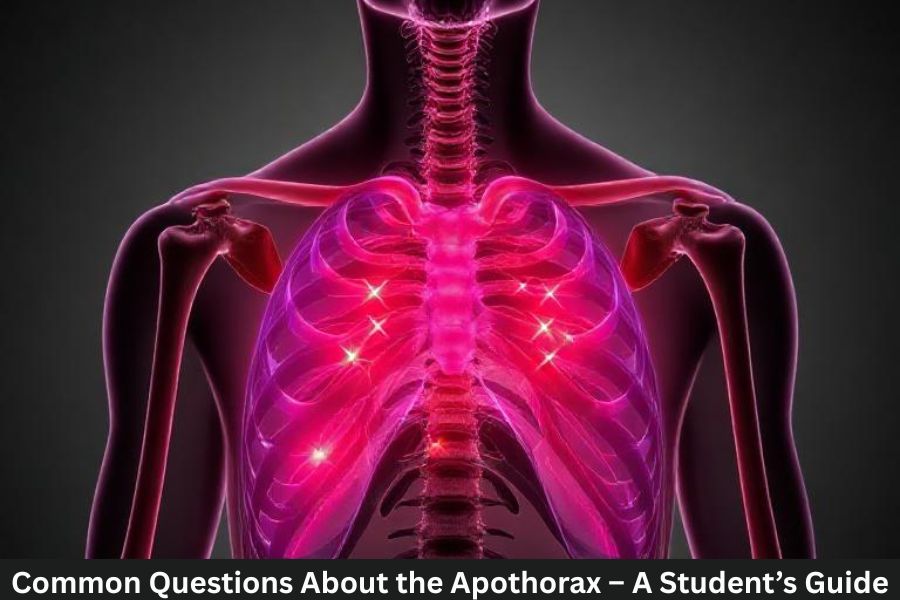
When you’re studying anatomy for the first time, it can feel like you’re learning an entirely new language. One term that often throws students off is apothorax. If you’ve come across it in old notes, outdated textbooks, or a random practice exam, you’re not alone in wondering what it actually means. Let’s clear it up in the simplest way possible.
Why Students Struggle With Understanding the Apothorax
Students typically struggle with this term because it isn’t used much today. Most modern biology courses don’t include it, so when the word randomly appears, it looks unfamiliar—almost like a trick term.
Importance of Learning Basic Biological Terminology
The key to mastering anatomy is understanding how terms are built. Even rare or outdated words can teach you something about how anatomical vocabulary works.
What Is the Apothorax?
Definition
The apothorax is an obsolete or rarely used anatomical term historically used to refer to an upper section or extension of the thoracic region. In modern terminology, this concept has largely been folded into the general discussion of the thorax.
Relationship to Thoracic Anatomy
While the thorax refers broadly to the chest region, the “apothorax” was sometimes used in older anatomical texts to label a specific area near the upper thoracic cavity.
Why the Term Confuses Many Students
Because the term isn’t used in standard anatomy books today, students often think it refers to a new or special body part—which it doesn’t.
Origin of the Term “Apothorax”
Historical Context
The term appears in older anatomy references and early discussions of comparative anatomy. It’s one of those legacy words that never fully made it into modern usage.
Use in Academic Discussions
Some professors mention the term while teaching the evolution of anatomical terminology or while referencing historical sources.
Is It Still Used Today?
Rarely. Most fields prefer consistency, and the term “thorax” covers everything needed.
Common Misconceptions About the Apothorax
Misidentifying It as a Body Part
Many students assume it’s a unique anatomical structure—which isn’t true.
Confusing It with the Thorax
It’s understandable that students mistake the two. The apothorax simply refers to a part of the thoracic region, not an entirely separate area.
Understanding When and Why the Term Might Appear
If you see it, it’s often due to extremely old course material or a historical reference, not because it’s required knowledge.
How the Apothorax Fits Into Anatomy Studies
Its Role in Comparative Anatomy
Older comparative anatomy texts occasionally used this term to differentiate upper thoracic features in certain animals.
Why It’s Rarely Seen in Modern Biology Textbooks
As anatomy education shifted toward standardized terminology, outdated names were phased out.
How Exam Questions May Reference It
Most exams today won’t include it—unless they’re referencing historical classifications or testing your ability to use context clues.
Why Students Encounter the Term
Old Course Materials
Some teachers reuse materials they’ve used for decades, leading to outdated terminology.
Translation Issues
Texts translated from older languages may keep archaic words like “apothorax.”
Teachers Using Outdated Terminology
Professors who studied with old references may still mention legacy terms.
How to Identify Terms Similar to “Apothorax”
Prefix Analysis
“Apo-” often means “away from” or “off to the side,” which can hint at anatomical position.
Root Word Recognition
Knowing root words helps you decode meaning even when the term is unfamiliar.
Importance of Context Clues
Always look at how the word is being used in the sentence or diagram. That often solves half the mystery.
Tips for Understanding Rare or Obscure Terms
Using Academic Dictionaries
Specialized medical dictionaries can help confirm whether a term is outdated, rare, or still valid.
Asking Professors for Context
Don’t hesitate to ask. Your instructor can tell you whether the term is test-relevant.
Verifying Definitions Through Multiple Sources
If a word appears only in one source, chances are it’s not widely accepted anymore.
Should You Memorize the Term Apothorax?
Is It Relevant for Exams?
Typically, no. Modern exams emphasize current terminology.
How Often It Appears in Coursework
Almost never—unless you’re studying historical anatomy.
When It’s Safe to Ignore
If your primary textbook doesn’t mention it, you can safely move on.
How to Study Smarter When Learning Anatomy
Focus on Key Concepts First
Learn the major anatomical systems before worrying about obscure terms.
Break Down Terms by Structure
Prefixes, suffixes, and roots give clues—even for rare terms.
Use Visual Aids and Flashcards
Seeing terms in diagrams makes them much easier to remember.
Future Terminology Trends in Biology
Movement Toward Standardization
Expect fewer outdated terms in future textbooks.
Reduction of Outdated Terms
As medical science modernizes, archaic terms fade out.
How Students Can Keep Up
Follow updated resources, digital textbooks, and modern anatomy websites.
Conclusion
The term apothorax might seem confusing at first glance, but once you understand its historical roots and its relationship to the thoracic region, it becomes much less intimidating. While it rarely appears in modern anatomy, learning about it helps you build stronger skills in decoding complex biological terminology. And in the world of anatomy, those skills are everything.
FAQs
1. Is the apothorax a real body part?
It refers to a historical anatomical concept, not a modern or separate structure.
2. Why do some textbooks mention the apothorax?
Because they’re based on older terminology or translations.
3. Will I be tested on the apothorax?
Most likely not, unless your course includes historical anatomy.
4. What should I do when I see obsolete terms?
Use context clues and confirm with updated sources.
5. Is the apothorax still used in modern biology?
It’s extremely rare and generally replaced by standard thoracic terminology.